Durban’s Logistics & Manufacturing Shift in 2026: What It Means for Employers and Recruitment
What happens when a city’s supply chains start moving faster, infrastructure investment picks up, and industrial activity begins to regain momentum? In Durban, the answer is simple: pressure on hiring increases almost immediately.
But while opportunities are growing, so are the complexities of hiring. Employers are no longer just competing for talent. They’re competing for speed, reliability, and flexibility in how that talent is sourced and deployed.
This is where the role of a recruitment agency in Durban becomes increasingly important. In a market shaped by constant movement and operational demands, recruitment is no longer a back-office task but a key part of keeping business moving.
In this article, we take a closer look at what’s really driving Durban’s logistics and manufacturing shift and what it means for recruitment in 2026.
Is Durban really experiencing a Logistics and Manufacturing boom?
The term “boom” needs to be understood carefully. Durban is not experiencing uniform growth across all sectors. But it is seeing strong, investment-led expansion in logistics and industrial development.
What is driving economic activity in Durban?
Recent developments across KwaZulu-Natal include:
- Billions in investment pledges across multiple sectors
- Large-scale infrastructure and logistics projects
- Industrial park and business estate developments
- Continued upgrades to port equipment and operations
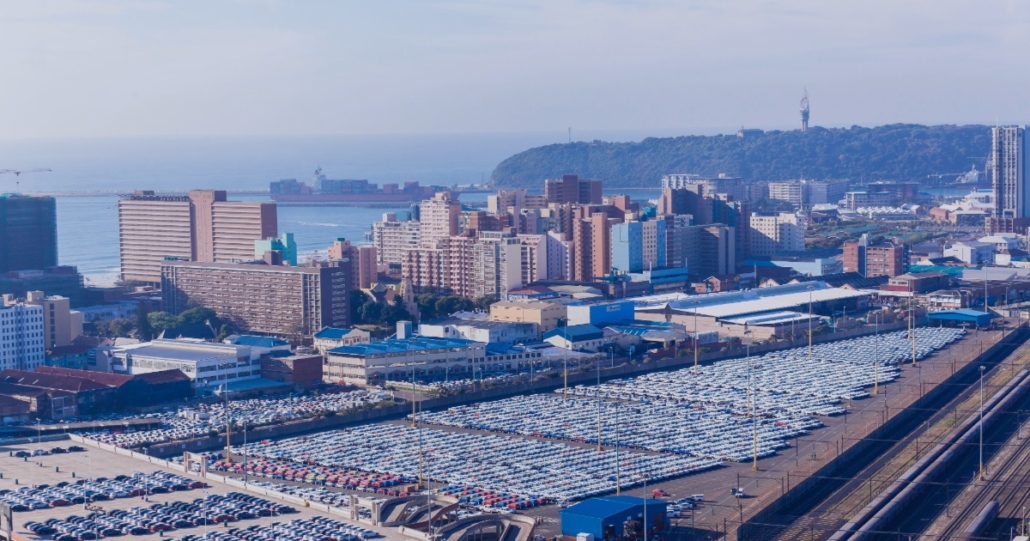
A major contributor to this activity is Durban’s port system, which remains one of the busiest container hubs in South Africa. While the port has faced operational challenges in recent years, there is a clear and ongoing focus on recovery, efficiency improvements, and infrastructure modernisation.
As port operations improve, businesses in transport, warehousing, and manufacturing are better positioned to scale, driving increased demand for both skilled and semi-skilled workers.
Why does port activity affect recruitment so strongly?
The ports of Durban act as a gateway for imports and exports, which means any improvement in port efficiency has a ripple effect across:
- Transport and trucking operations
- Warehousing and distribution centres
- Clearing and forwarding services
- Manufacturing businesses reliant on imported materials or export markets
When cargo moves more efficiently through the port, businesses can operate at higher capacity. This, in turn, increases the need for reliable, work-ready staff across the supply chain.
In practical terms, even moderate improvements in turnaround times or equipment availability can lead to noticeable increases in workforce demand, particularly in high-volume environments.
Which roles are seeing increased demand?
As port-linked activity improves, hiring demand is increasing across both blue-collar operational roles and white-collar technical and management positions. This reflects the need to support not only day-to-day operations, but also planning, coordination, and compliance across the supply chain.
Blue-Collar and Operational Roles
On the ground, businesses require dependable, work-ready employees to keep goods moving efficiently. High-demand roles include:
- Forklift operators and general warehouse workers
- Code 10 and Code 14 drivers
- Pickers, packers, and dispatch staff
- Artisans such as electricians, welders, and millwrights
- Machine operators and maintenance personnel
These roles are critical for maintaining productivity in high-volume environments where delays can quickly lead to operational bottlenecks.
White-Collar and Specialist Roles
At the same time, there is growing demand for professionals who can manage and optimise logistics processes, including:
- Logistics coordinators and dispatch controllers
- Supply chain analysts and planners
- Clearing and forwarding administrators
- Inventory and stock control specialists
- Operations and warehouse managers
These positions play a key role in ensuring efficiency, compliance, and cost control, particularly as supply chains become more complex and time-sensitive.
Why is this demand challenging for employers?
While demand is increasing across both categories, hiring is often time-sensitive and volume-driven, especially in port-linked environments where workloads can shift quickly.
Employers frequently face challenges such as:
- The need for immediate availability of skilled workers
- Difficulty sourcing candidates with relevant industry experience
- Balancing short-term operational needs with long-term workforce planning
As a result, many businesses find that traditional hiring methods are too slow or inflexible to keep up, making it essential to adopt more agile recruitment strategies.
What Does This Mean for Recruitment Strategies in 2026?
The growing influence of Durban’s port on hiring trends highlights a clear shift in how businesses approach recruitment. As a result, recruitment is becoming more reactive, flexible, and operationally driven. Particularly in logistics and manufacturing environments where workloads can fluctuate rapidly.
How are employers adapting their hiring strategies?
To keep pace with these changing demands, employers are increasingly adopting:
- Temporary and contract staffing models to respond to short-term spikes in workload
- Scalable workforce solutions that allow teams to expand or reduce as needed
- Ongoing partnerships with recruitment providers for consistent access to pre-screened talent
- Blended workforce models, combining permanent staff with flexible labour to maintain efficiency
This shift is especially important in port-linked industries, where delays, volume changes, and project timelines require a workforce that can adapt quickly without compromising productivity.
The role of a Recruitment Agency in Durban
In a fast-evolving market shaped by port activity, infrastructure investment, and shifting workforce demands, recruitment can no longer be treated as a purely administrative function, it has become a critical driver of operational success.
To navigate this complexity, many organisations are choosing to partner with a recruitment agency in Durban that understands the local labour market, industry dynamics, and the realities of port-linked operations.
A specialised recruitment partner brings more than just candidates. They provide:
- Rapid access to pre-screened, work-ready blue- and white-collar talent
- Expert handling of compliance, onboarding, and payroll administration
- Workforce solutions that scale in line with fluctuating operational demand
- Strategic support for workforce planning and long-term talent pipelines
In an environment where timing, efficiency, and reliability are essential, having the right people in place can make the difference between operational delays and seamless delivery.
Ultimately, partnering with a trusted recruitment agency enables businesses to remain agile, compliant, and competitive, while focusing on what they do best: driving productivity, meeting demand, and growing sustainably in Durban’s evolving logistics and manufacturing landscape.

